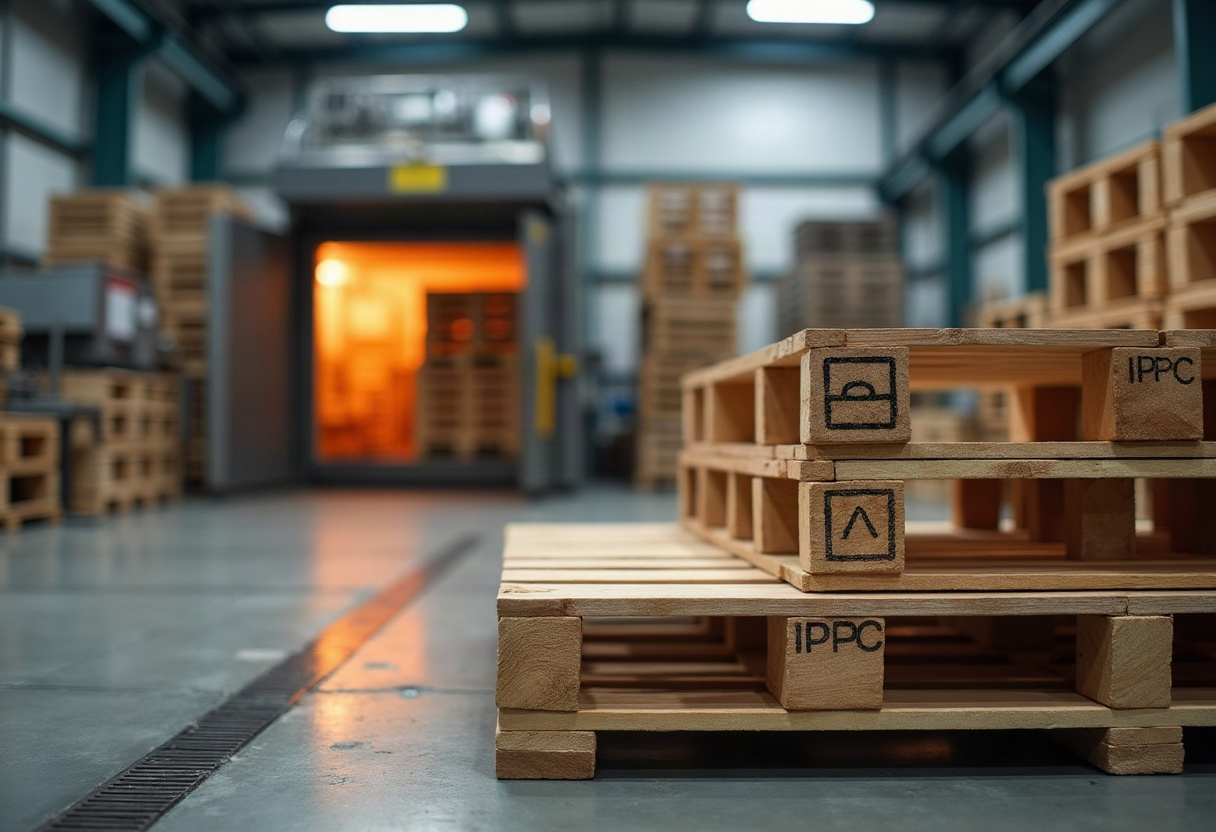
If you ship freight internationally, someone has probably asked whether your pallets are treated. The question sounds simple — are pallets treated wood? — but the answer depends on where your freight is going, what it carries, and which regulations apply. Getting it wrong means customs delays, refused loads, and sometimes a full pallet of product sent back at your expense.
Here is what shippers in the Kent Valley and across the Puget Sound corridor need to know about pallet treatment, ISPM-15 compliance, and how to source the right pallets for export.
What Does "Treated Wood" Mean for Pallets?
Wood pallets can carry pests — termites, powder-post beetles, and nematides that burrow into raw lumber. When pallets cross international borders, those pests go with them. The International Plant Protection Convention (IPPC) established ISPM-15 to prevent the spread of forest pests through wood packaging material.
Under ISPM-15, pallets used for international shipping must be treated using one of two approved methods:
- Heat treatment (HT) — The wood is heated in a chamber until the core temperature reaches 56°C (133°F) for at least 30 continuous minutes. This kills pests without chemicals. It is the most common and widely accepted method today.
- Methyl bromide fumigation (MB) — The pallets are fumigated with a chemical gas. This method is being phased out globally because methyl bromide depletes the ozone layer. Many countries no longer accept MB-treated pallets.
Once treated, the pallet receives an IPPC stamp — a mark on the side that includes the treatment code, country of origin, and facility number. That stamp is your proof of compliance. Without it, customs will not let the pallet cross the border.
Which Pallets Need Treatment and Which Do Not?
Not every pallet needs treatment. The rule is straightforward:
Pallets that need ISPM-15 treatment:
- Any wood pallet used for international shipping (export or import)
- Pallets moving between countries that enforce ISPM-15
- Wood pallets used in air freight or ocean freight crossing borders
Pallets that do not need treatment:
- Standard domestic pallets used within the United States
- Pallets used for local or regional freight within Washington State
- Pallets made from engineered wood products like plywood, OSB, or particleboard (these are exempt because the manufacturing process destroys pests)
Most 48x40 GMA pallets moving through warehouses in Kent, Renton, and Auburn are untreated. They never cross a border, so ISPM-15 does not apply. The treatment requirement kicks in when freight goes overseas.
Heat-Treated vs. Chemically Treated Pallets
If you need treated pallets for export, heat treatment is the standard. Here is how the two methods compare:
| Method | Process | Chemicals Used | Cost Impact | Availability | |--------|---------|-----------------|-------------|--------------| | Heat treatment (HT) | Heated to 56°C core temp for 30 min | None | Adds $1–$3 per pallet | Widely available | | Methyl bromide (MB) | Gas fumigation in sealed chamber | Methyl bromide gas | Being phased out | Limited, declining |
Heat-treated pallets are what most exporters use today. They are clean, chemical-free, and accepted by virtually every country. If your operation ships food products, pharmaceuticals, or anything sensitive, heat-treated pallets are the only wood option you should consider.
For operations that need even higher sanitation standards, metal pallets offer a treatment-free alternative. They never need ISPM-15 certification because they are not wood, and they withstand repeated cleaning without degradation.
How to Verify Your Pallets Are Compliant
If a customer or freight forwarder asks for treated pallets, here is how to verify:
-
Look for the IPPC stamp. It should be on at least two sides of the pallet. The stamp includes:
- The IPPC logo (a wheat-like symbol)
- "HT" for heat treatment or "MB" for methyl bromide
- Country code (e.g., "US" for United States)
- A facility code assigned by the national plant protection organization
- The standard reference (e.g., "ISPM-15")
-
Check the stamp is legible. A stamp that has worn away or is unreadable is treated as non-compliant. Pallets that have been repaired must be re-stamped by a certified facility.
-
Confirm the facility is certified. The facility code on the stamp corresponds to a registered ISPM-15 treatment facility. If you are unsure, you can verify through your pallet supplier.
-
Keep documentation. Many freight forwarders ask for a treatment certificate. Your pallet supplier should be able to provide this for each batch.
Sourcing Treated Pallets in the Kent Valley
If you export through the Port of Seattle or the Port of Tacoma, you need ISPM-15 compliant pallets before freight reaches the terminal. A-1 Pallets supplies heat-treated pallets from our facility on East Valley Highway in Kent. We stamp every export pallet with the required IPPC mark, and we keep treatment documentation on file.
For mixed operations — domestic distribution plus some export — many of our customers run a hybrid approach: standard untreated pallets for domestic freight and a separate stock of heat-treated pallets for export loads. This keeps costs down for domestic moves while ensuring compliance for anything crossing the border.
If you are not sure what you need, request a quote with your shipping details and we will match the right pallet type to your freight requirements. We have been supplying treated and untreated pallets to Washington businesses for over 24 years, and we can help you navigate the ISPM-15 requirements for any destination country.