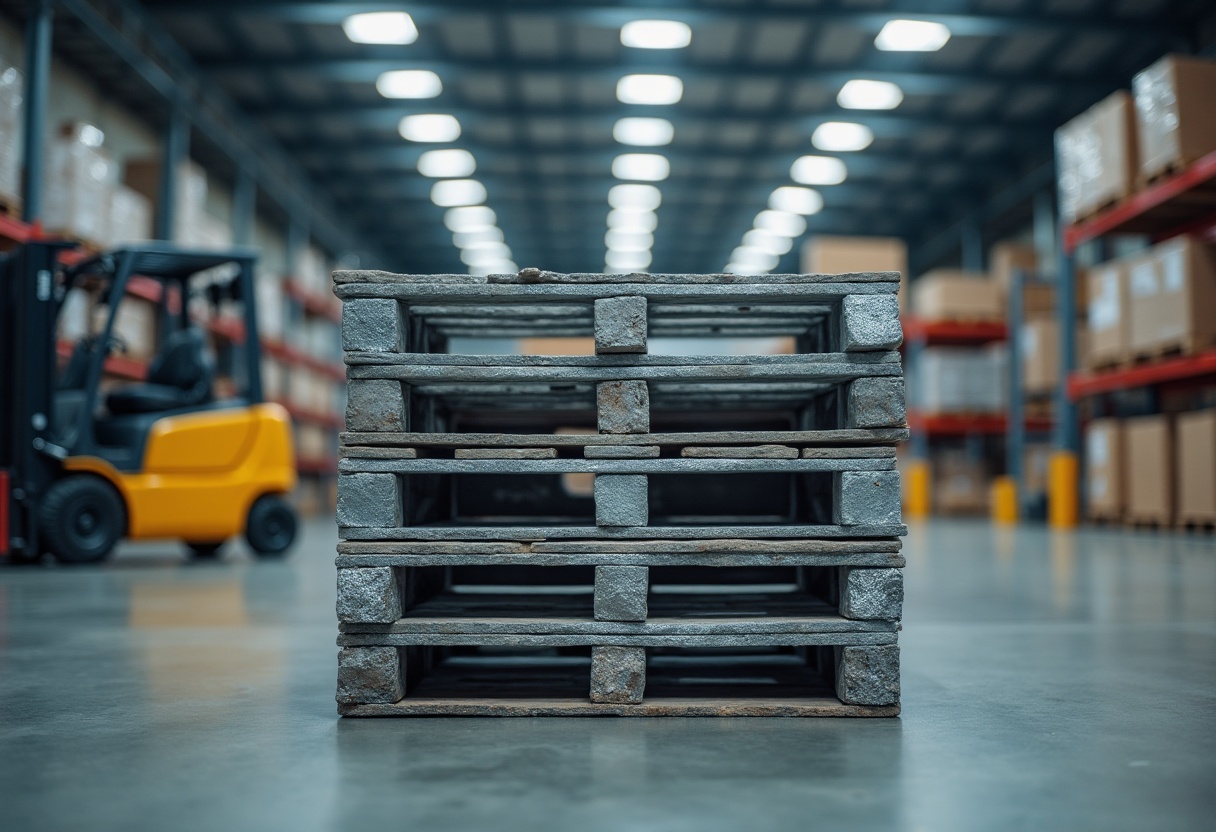
If your warehouse keeps replacing the same wood pallets every few months, metal pallets might be the upgrade that pays for itself. They cost more up front — sometimes three or four times the price of a comparable wood pallet — but they last longer, handle heavier loads, and meet sanitation standards that wood cannot. This guide covers what to look for when buying metal pallets, how the pricing works, and when the investment makes sense for operations in the Kent Valley and the broader Puget Sound corridor.
What Is a Metal Pallet?
A metal pallet is a flat transport structure made from steel or aluminum instead of wood. The deck can be solid or open-grid, supported by stringers or blocks, just like a wood pallet. The two common materials are:
- Steel pallets — built from 14 to 18 gauge cold-rolled steel. Heavier, stronger, and cheaper than aluminum. Most common in manufacturing, automotive, and heavy industrial settings.
- Aluminum pallets — lighter than steel, resistant to corrosion, and used in food processing, pharmaceuticals, and cleanroom environments where rust is a hard no.
Both types come in the standard 48x40 GMA footprint, but custom sizes are available for operations running non-standard racking or specialized equipment.
Metal Pallet Pricing: What You Actually Pay For
The price of a metal pallet depends on three things: material, gauge (thickness), and size. Here is what you can expect:
| Type | Size | Price Range (New) | Notes | |------|------|-------------------|-------| | Steel, 16-gauge | 48x40 | $60–$90 | Most common industrial option | | Steel, 14-gauge | 48x40 | $85–$120 | Heavier loads, longer life | | Aluminum | 48x40 | $90–$180 | Food-grade, cleanroom | | Steel, custom | Varies | $100–$250+ | Non-standard dimensions |
Used metal pallets cost 40 to 60 percent less than new. The catch is supply — you find them when a distribution center closes or upgrades, not on demand. A supplier with pallet recycling operations can source used metal pallets if you have flexibility on timing.
If you are running a closed-loop system — where pallets go out and come back to the same warehouse — the math gets interesting. A wood pallet at $15 that lasts 4 trips costs $3.75 per trip. A steel pallet at $80 that lasts 200 trips costs $0.40 per trip. The metal pallet wins on cost-per-trip once you pass the break-even point, which is usually around 18 months in a high-rotation operation.
When Metal Pallets Make Sense
Not every operation needs metal pallets. Here is where they earn their keep:
Food and pharmaceutical production. The FDA and USDA favor metal pallets in processing environments because they do not absorb moisture, harbor bacteria, or splinter into product. Wood pallets require heat treatment or chemical certification for these uses; metal pallets are clean by default.
Heavy loads and high-stacking. If your racking system stores pallets stacked 6+ high with dense product, steel pallets will not buckle under the weight. A 14-gauge steel pallet rated at 8,000 pounds static load gives you headroom that wood cannot match.
Closed-loop and captive fleets. When pallets stay within your facility or circulate between two known locations, the higher upfront cost amortizes quickly. You are not losing pallets to one-way shipments or customers who never return them.
Fire safety requirements. Some municipalities and insurance carriers require or prefer metal pallets in certain warehouse zones because they do not burn. Check with your local fire marshal — Kent and Tukwila both have industrial corridors where this comes up.
When Wood Pallets Are the Better Choice
Metal pallets are not always the right answer. If you ship one-way to customers, the pallet likely never comes back. Sending a $90 steel pallet on a one-way trip is a loss every time. Standard wood pallets handle one-way shipping fine at a fraction of the cost.
If your loads are under 1,500 pounds and your operation does not have sanitation requirements, wood is the pragmatic choice. Choosing the right pallet type depends on your use case, not on what sounds more durable.
Sizing and Compatibility
Most metal pallets follow the same 48x40 footprint as wood GMA pallets, so they fit standard racking, pallet jacks, and forklifts without modification. If your operation uses a different size — 42x42 for beverages, 48x48 for drums — ask your supplier about custom fabrication. Lead times run 2 to 4 weeks for non-standard sizes.
One thing to verify: rackable versus non-rackable. A rackable metal pallet is engineered to span beam supports without sagging. Non-rackable models are fine for floor stacking but will warp if you put them in drive-in or selective racking. The price difference is usually $15 to $30 per pallet, and the wrong choice will cost you in damaged product.
Buying Metal Pallets in the Kent Valley
A-1 Pallets operates from the East Valley Highway corridor in Kent, WA, supplying pallets to warehouses, manufacturers, and distribution centers across Kent, Renton, Auburn, Seattle, and Tacoma. The Kent Valley is one of the densest warehousing corridors on the West Coast — companies running high-volume operations here see the most benefit from metal pallets because the rotation frequency is high enough to amortize the cost quickly.
If you are considering a switch from wood to metal, request a quote with your pallet specs — size, gauge, load requirement, and quantity — and you will get current pricing with delivery options. Metal pallet inventory fluctuates based on steel and aluminum market prices, so locking in a quote is better than waiting for a price drop that may not come.
If you need a pallet supplier that handles both wood and metal, our pallet supplier guide for Washington State covers what to look for in a vendor.