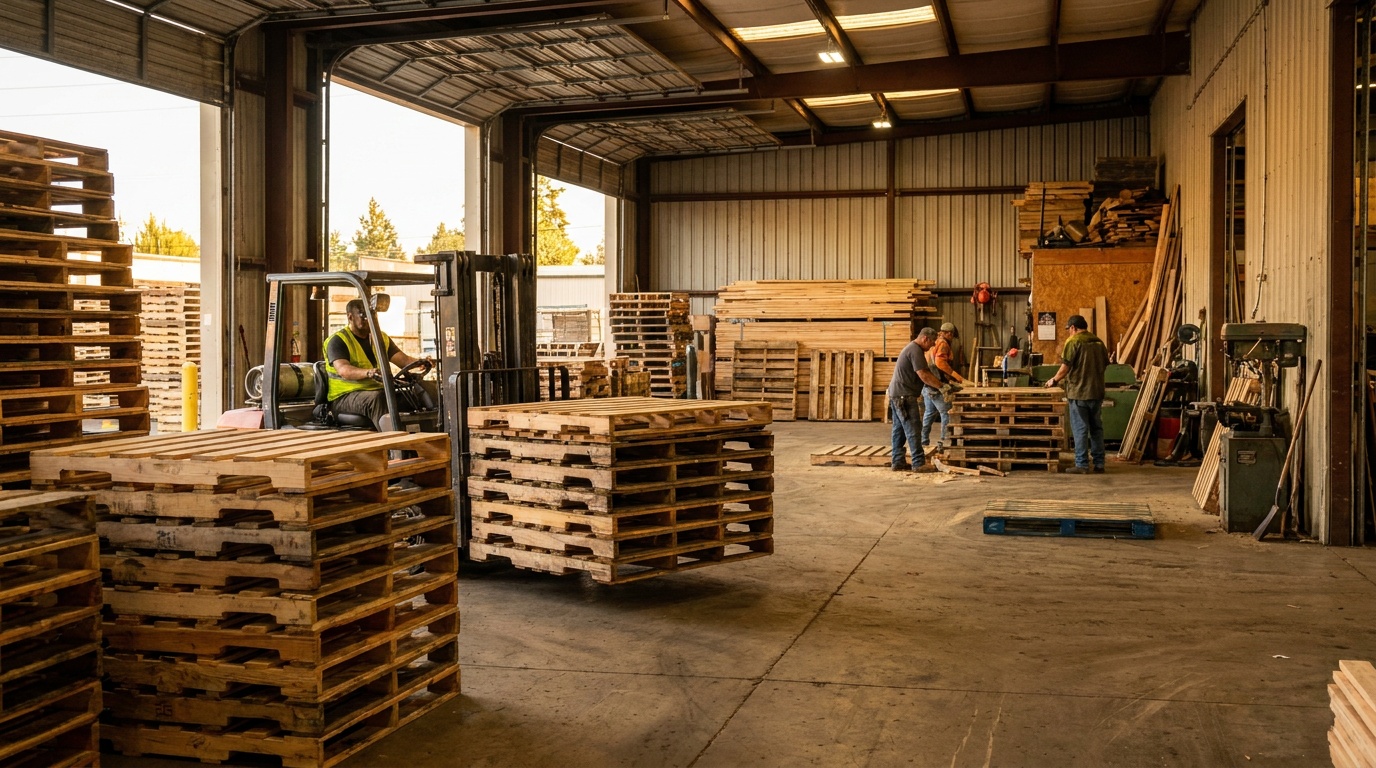
When you're running a distribution center in Seattle, a manufacturing plant in Tacoma, or a warehouse in Kent, you don't have time to hunt for a pallet supplier washington state that actually delivers what they promise. After decades of moving pallets through Washington's logistics corridors, we've learned that the difference between smooth operations and constant headaches comes down to one thing: who you're buying from.
A pallet supplier isn't just someone who sells you wood and nails. It's a partner who understands your deadlines, your equipment, your budget constraints, and the specific challenges of doing business across the I-5 corridor from Auburn to Seattle. Most businesses we talk to have been burned by suppliers who disappear when an order runs late or who drop off damaged stock without explanation.
Here's what we've built A-1 Pallets, Inc. to be—and why companies in Renton, Auburn, Kent, Seattle, and Tacoma have stuck with us.
1. Local Knowledge Beats National Logistics Every Time
The biggest pallet suppliers operate like utilities—they move volume, hit margins, and don't care if your truck can't fit through your loading dock or if you need pallets by Thursday morning.
We're different. We're here. We know that businesses along the 167 corridor in Kent have tight warehouse spaces. We know that Renton distribution hubs often run custom specs because of their clientele. We understand that a manufacturing plant in Auburn can't wait two weeks for a restock—you need pallets now.
When you order from us, you're not a transaction number. You're a customer we might see again next month, or whose owner we might run into at a local logistics meeting. That accountability shows up in service. Our delivery trucks know the fastest routes to your dock. Our team knows whether your forklift is a side-loader or a standard lift, because we've talked about it. And when something goes wrong—a shipment arrives damaged or an order ships incomplete—we fix it the same day, not three weeks later.
National suppliers can't offer that. They're optimized for bulk orders and regional hubs. If you need 20 pallets in Tacoma by Friday, you're not their priority. For us, that's a normal Tuesday.
2. We Stock What You Actually Need (Not What's Easy to Ship)
Walk into most pallet yards and you'll see one thing: standard 48x40 pallets. That's the industrial backbone, and we carry them—thousands of them. For a complete breakdown of 48x40 dimensions and weight specs, see our full pallet guide.
But we also know that "standard" doesn't fit every business.
A food distribution client in Seattle needed 42x42 pallets to match their older racking system. A Tacoma manufacturer needed reinforced decking because they were stacking heavy machinery. An Auburn logistics company needed lighter-weight pallets to reduce shipping costs on outbound loads. A Kent plant required food-grade certification because their product went into restaurants.
Most pallet suppliers say "We can order that" and then disappear for six weeks. We build it in-house or source it reliably, with lead times you can actually plan around. We've invested in the equipment and relationships to give you options, not excuses.
3. Quality Inspection That Actually Matters
Used pallets are cheaper—sometimes 40-60% less than new—and they work fine for internal operations, warehouse shuffling, or non-regulated products. But "used" doesn't mean "thrashed."
We inspect every used pallet we source. Nails checked. Deck boards measured. Stringers examined for cracks or rot. We reject about 15-20% of used inventory before it ever enters our yard, which means you're not inheriting someone else's disposal problems.
New pallets come stamped, certified, and ready for pharmaceutical, food-grade, or export applications. We can heat-treat them, add custom markings, or wrap them before shipment.
The point: you get what you're paying for. No surprises at your dock.
4. Pricing That Reflects Your Actual Volume (Not Just List Price)
Here's where most national pallet suppliers make their money: they publish a price, you get that price whether you're buying 50 pallets or 5,000.
We've been doing this long enough to understand that volume should matter, but so should loyalty, consistency, and the fact that you're a local business supporting local jobs.
If you've been ordering from us for two years and suddenly you need a larger shipment, we adjust. If you commit to monthly orders, we build that into pricing. If you're a new customer with a tight budget, we listen—because we'd rather have reliable, recurring business than chase one-time deals.
Pricing varies based on:
- Pallet type (new vs. used, standard vs. custom)
- Quantity (economies of scale, obviously)
- Delivery location (central Kent or Renton costs less to service than rural areas)
- Timeline (rush orders cost more; planned, regular orders cost less)
Call us. We'll quote you honestly and explain the numbers. Most customers are surprised at how competitive we are once they understand what's actually included.
5. Delivery You Can Actually Count On
We own our trucks. We run our routes. We show up on time or we call you with a real explanation—not an automated text that says "Your delivery window is 8am–5pm."
A business in downtown Kent needed an emergency pallet shipment for a production restart. Their regular supplier had a three-day lead time. We delivered it the same morning because we had stock and availability. That's not a special service—that's how we operate.
We deliver to Kent, Renton, Auburn, Seattle, and Tacoma on predictable schedules. If you're outside those zones, we arrange freight, but we manage it ourselves instead of handing you off to a random broker. You get a person to contact, not a tracking number.
6. Custom Solutions for Specific Industries
Pallets aren't one-size-fits-all, even though the industry pretends they are.
Grocery & retail need lightweight, clean pallets that won't contaminate products or attract inspectors. We've supplied hundreds of pallets to stores and distribution centers across Washington.
Manufacturing often needs reinforced pallets or custom footprints to match existing racking and equipment. We've built pallets for metalworking plants, woodworking shops, and assembly lines in Auburn and Tacoma.
Food service & restaurants require food-grade certification and sometimes custom branding. We handle the documentation and certifications so you don't have to.
Automotive & heavy equipment needs pallets rated for weight distribution and durability through repeated use. We understand the stress and build accordingly.
Export shipments require heat treatment and ISPM-15 certification. We handle that in-house.
It takes years to understand these distinctions. It's not something you learn from a website. It comes from talking to customers, solving problems, and doing the work.
7. Flexibility When Plans Change
You ordered 100 pallets for next month. Something changed—maybe a client canceled, maybe production ramped up faster than expected. Now you need 50 or 200.
We adjust. We don't penalize you for changes unless they're genuinely harmful to our scheduling. We've been in business long enough to know that rigid contracts don't reflect how real companies actually operate.
If you need to return pallets, we take them back (within reason). If you need to defer a shipment, we'll hold stock if we can. It's not charity—it's the cost of doing business with people you want to keep working with.
Looking for more? Read our guide on A1 Pallets Inc: Your Trusted Pallet Partner in Washington.
The bottom line: A pallet supplier washington state matters more than most businesses realize. Your pallets move your product, support your equipment, and affect your cash flow. Choosing the wrong supplier creates hidden costs—missed deliveries that stall production, damaged inventory, quality issues that ripple through your operation, or pricing surprises that blow your budget.
We've built A-1 Pallets, Inc. to be the opposite of that. We're local, accessible, flexible, and obsessed with quality. We know our service areas because we work there every day. And we understand that your business is complex—which is why we treat it that way.