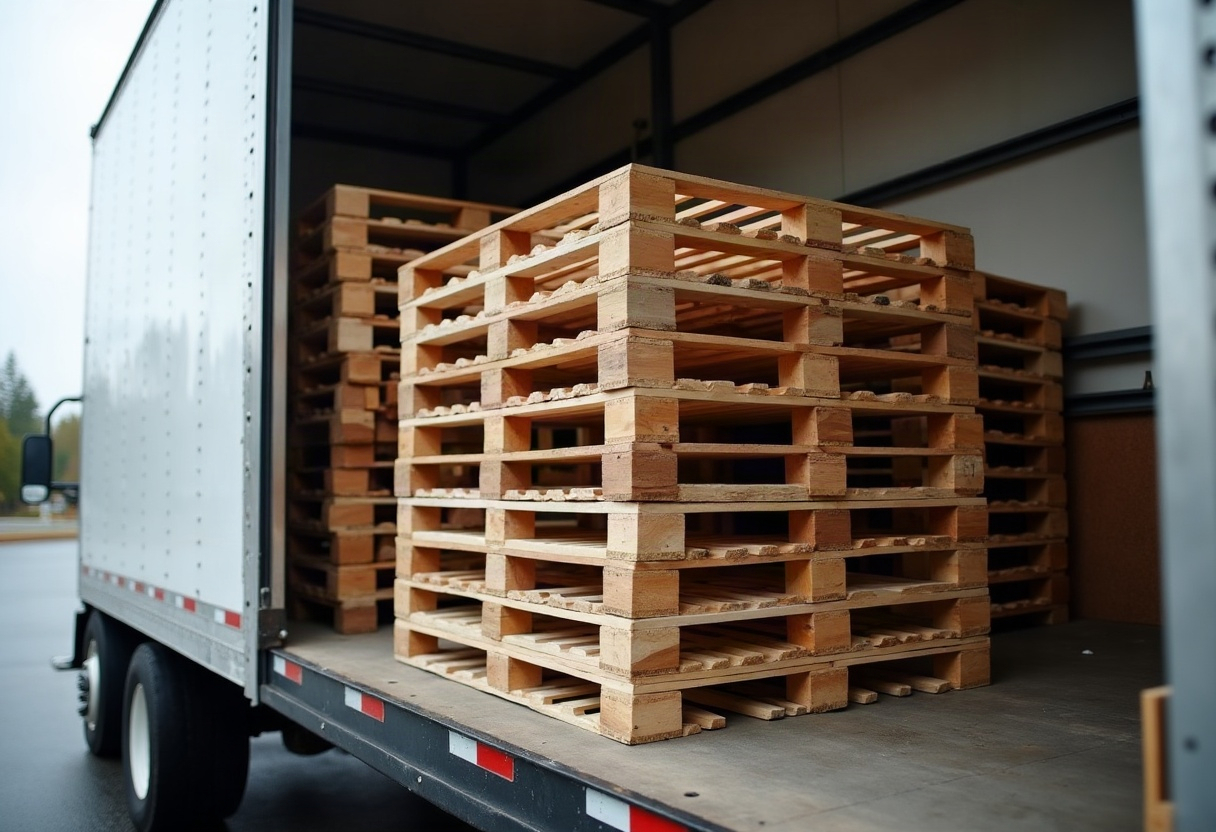
A pallet pileup is one of those problems that starts small and quietly takes over. A dock gets 20 extra pallets one week, 40 the next, and before long there is a wall of wood eating into usable space, creating a trip hazard, and blocking access. For warehouses, manufacturers, and distributors around Kent and South King County, pallet removal is the fastest way to get that space back.
This guide covers how pallet removal works, what it costs (and when you get paid), recycling vs. disposal, and how to schedule a pickup that actually clears the pile.
How Pallet Removal Works
The process is simple, but the economics depend on what you have:
- You list the pallets — count, size (most commonly 48x40 GMA), and condition (reusable vs. broken).
- A hauler quotes the job — based on quantity, type, condition, and your location.
- A truck is dispatched — to your dock, yard, or warehouse to load and haul.
- Pallets are sorted — reusable ones re-enter circulation; broken ones go to recycling.
The key variable is value. Standard wood pallets in good shape are a commodity — there is real demand for them, so a hauler may pay you rather than charge you. Broken, odd-size, or tiny quantities usually carry a fee because the hauler has to cover truck time and disposal.
When Pallet Removal Pays You vs. Costs You
A lot of businesses are surprised to learn pallets can have positive value. The rule of thumb:
- Reusable 48x40 GMA pallets, good condition, 50+ units — you typically get paid.
- Odd sizes (custom, plastic, metal) or small quantities — value varies; some haulers take them, some charge.
- Broken / scrap wood pallets — usually a disposal or recycling fee, but far cheaper than landfilling.
If you have a steady stream of standard pallets, selling used pallets or setting up a recurring removal turns a nuisance into a small revenue line. If you have a one-time mess of mixed and broken pallets, the goal is simply clearing them cheaply and responsibly.
Recycling vs. Disposal
The responsible path is almost always recycling. Broken pallets do not need to hit a landfill — the wood is ground into landscape mulch, boiler fuel, or animal bedding. A reputable pallet recycler keeps that wood in use rather than burying it.
When you book a removal, ask where broken pallets go. A recycler that processes the wood locally (rather than just landfilling it) is the cleaner answer, and it is often the cheaper one too because landfill tipping fees in King County are not trivial. See our guide on where to drop off pallets for the local options.
How to Prep for a Pallet Pickup
A smooth pickup comes down to access and accurate information:
- Count accurately. Haulers quote on count — an off-by-50 estimate changes the truck and the price.
- Sort by type. Separate reusable 48x40s from broken and odd-size. Reusable ones may earn you money; broken ones are a disposal call.
- Clear access. Make sure a box truck or trailer can reach the pallets. If they are deep in a warehouse with no forklift, say so up front so the hauler brings the right crew.
- Know your pallets. Buying new pallets or finding a supplier is a different conversation — but if you are also sourcing replacements, a full-service pallet company can handle both removal and supply.
Scheduling Pallet Removal in the Kent-Seattle Area
Most local haulers set a minimum pickup quantity (often 20-50 pallets) to justify the truck run. If you are below that, options are a drop-off at a recycler, waiting until you accumulate more, or coordinating with a neighboring business to combine loads.
At A-1 Pallets Inc. in Kent, WA, we handle pallet removal, pallet recycling, and pallet pickup across Kent, Renton, Auburn, Seattle, and Tacoma. If you have a stack of pallets taking up space — reusable or broken, large quantity or small — we can quote the job, dispatch a truck, and get your dock space back, often paying for pallets that still have life in them.