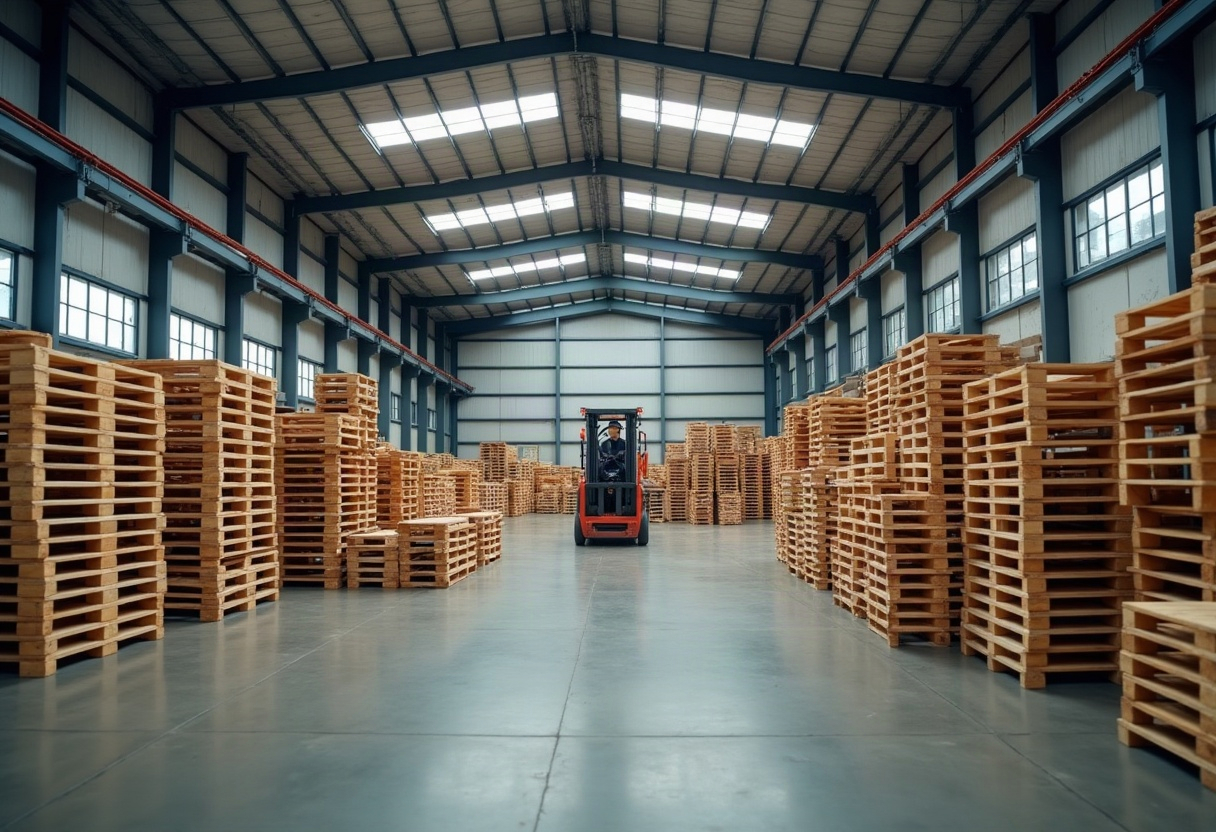
A pallet manufacturer is a company that builds pallets from raw lumber or engineered wood. That sounds straightforward, but the pallet industry has three layers — manufacturers who produce, recyclers who repair, and brokers who resell — and not every company calling itself a "pallet supplier" actually manufactures anything. For businesses in Kent, WA and the Pacific Northwest that need volume, consistency, or custom specs, the difference matters. A manufacturer controls the build; everyone else controls the inventory.
A-1 Pallets Inc. has been manufacturing, repairing, and selling pallets at 404 3rd Ave S in Kent, WA for over 22 years. This guide covers what to look for when sourcing from a pallet manufacturer, the production capabilities that separate a producer from a reseller, and how to evaluate a manufacturer for your volume and specifications.
Manufacturer, Recycler, or Broker: Know the Difference
The pallet supply chain has three distinct roles, and many companies operate in more than one. Understanding which role your supplier plays tells you what they can and cannot do for you.
The Manufacturer
A manufacturer cuts raw lumber into stringers and deck boards, assembles the components into finished pallets, and inspects the result. They control the lumber grade, the nail pattern, the dimension tolerance, and the moisture content. If you need a pallet built to a non-standard size or a heavier stringer for a specific load, only a manufacturer can do it. Our custom pallet solutions guide covers the specs and use cases for non-standard builds.
The Recycler
A recycler collects used pallets, sorts them by condition, repairs the salvageable ones with replacement lumber, and resells them. Recyclers do not produce new pallets from raw lumber — they extend the life of pallets already in circulation. For businesses running domestic freight where cost matters more than a fresh build, recycled pallets from a recycler with a repair shop are a sound choice. See our used pallets buyer's guide for how grading works.
The Broker
A broker buys pallets from manufacturers or recyclers and resells them without touching the production line. Brokers add convenience — they can source from multiple producers to fill large orders — but they cannot adjust the build, guarantee lumber grade, or produce a custom dimension. If your only requirement is a standard 48x40 GMA pallet in volume, a broker can fill the order. If you need a specific build tolerance or a custom size, you need a manufacturer.
What Production Capabilities Matter
When evaluating a pallet manufacturer, five production capabilities separate a real producer from a yard with a nail gun.
1. In-House Lumber Cutting
A manufacturer should cut stringers and deck boards on-site from raw lumber. This is what allows custom dimensions and tight tolerance control. A supplier that buys pre-cut components and only assembles them has limited flexibility — they can only build what the pre-cut kit allows.
2. GMA Standard and Custom Builds
The 48x40 GMA pallet is the industry standard for grocery and general freight. A manufacturer should produce it consistently. But the real test is whether they can also build non-standard sizes — 42x42 for beverage, 36x36 for specialty loads, or a one-off dimension for machinery. Our new pallets guide covers the GMA spec and when to deviate from it.
3. Heat Treatment for ISPM-15 Export
Pallets used for international shipping must be heat-treated and stamped with the ISPM-15 mark. A manufacturer with an on-site heat treatment facility can produce export-compliant pallets without sending them to a third party. Ask whether the manufacturer has its own kiln or heat chamber, or whether they subcontract the treatment step. For more on the treatment process, see our guide to heat treated pallets and the ISPM-15 standard.
4. Nail Pattern and Assembly Quality
The nail pattern — how many nails per joint, where they are placed, and what gauge nail is used — determines whether a pallet holds together under load. A manufacturer should have a consistent nailing spec, not a freehand approach. Ask to see a finished pallet and check that the nails are driven straight, not angled, and that the deck boards sit flush against the stringers.
5. Delivery and Volume Capacity
A manufacturer in the Pacific Northwest should deliver to your facility, not just hold pallets for pickup. A-1 Pallets Inc. delivers across Kent, Renton, Auburn, Seattle, Tacoma, and the surrounding region. For volume orders, confirm the manufacturer's production capacity — how many pallets per week they can build — so the timeline matches your demand.
Sourcing from A-1 Pallets Inc.
A-1 Pallets Inc. manufactures new GMA and custom pallets, repairs and recycles used pallets, and delivers across King and Pierce Counties from our yard at 404 3rd Ave S, Kent, WA 98032. We cut lumber on-site, heat-treat for ISPM-15 export compliance, and build custom dimensions for freight that does not fit a standard pallet. If you need a pallet manufacturer in the Pacific Northwest, request a quote or call (253) 395-3119 with your specifications and volume.