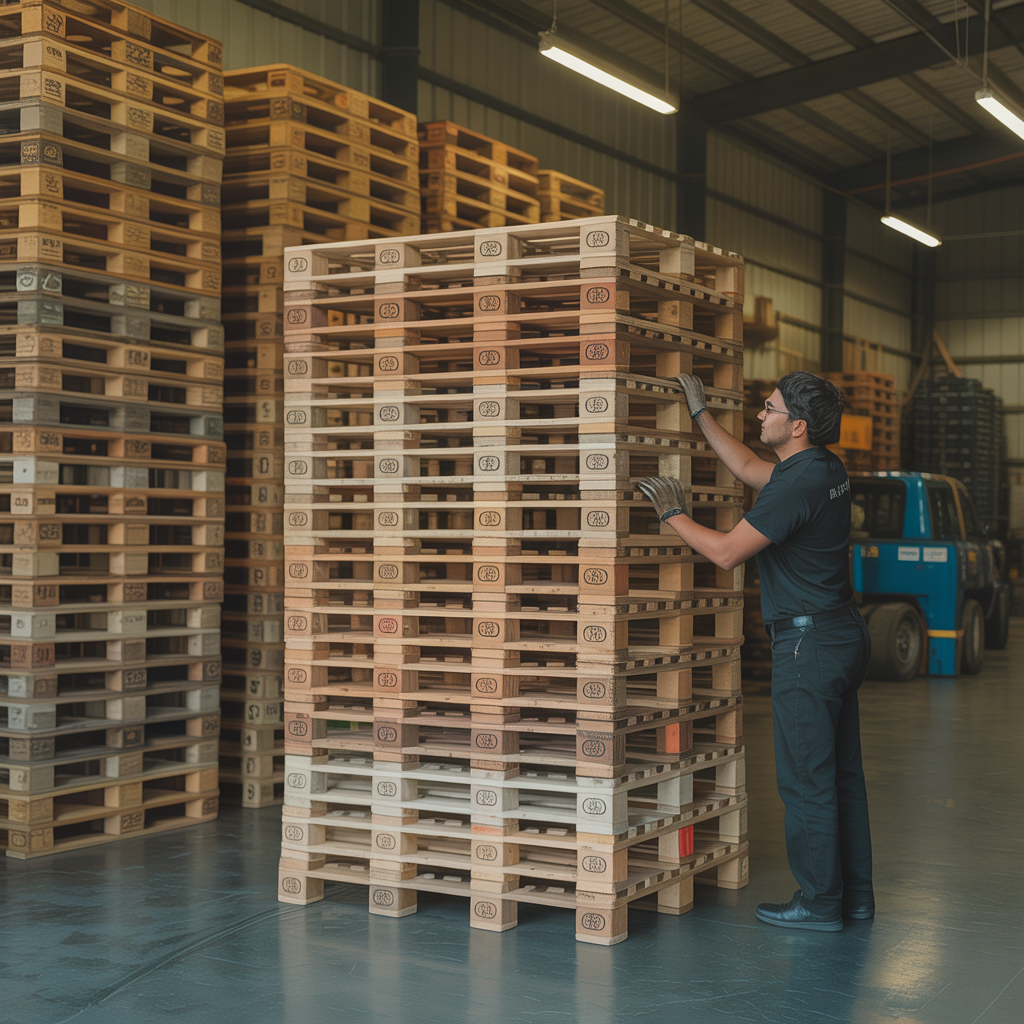
If you're running operations in Kent, Renton, Auburn, Seattle, or Tacoma, you've probably already figured out that A1 Pallets Inc isn't just another pallet supplier. We're the ones your warehouse manager calls at 7am because the usual vendor flaked on a delivery. We're the ones who remember your forklift specifications and show up with the right count, condition, and timeline — every single time.
After decades of moving pallets through Washington's supply chain, we understand what separates a transaction from a real partnership. This isn't marketing talk. It's what happens when you show up for your customers day after day, year after year.
What You'll Need
Before we dive into why choosing the right pallet supplier matters, here's what you should know we can provide:
- Standard 48x40 pallets (and other sizes on request)
- Same-day or next-day delivery across South King County and Pierce County
- Both new and reconditioned stock, depending on your budget
- Damage replacement guarantee — no questions, no excuses
- Delivery schedules that actually work with your warehouse operations
Step 1: Understand Why Your Pallet Supplier Matters More Than You Think
Most business owners treat pallet suppliers the same way they treat utilities — somebody you call when you need something. That's the mistake that costs you thousands.
Here's the reality: your pallet supplier affects your labor costs, your delivery timelines, your environmental footprint, and your bottom line. If a truck arrives with warped pallets, your crew spends two hours sorting instead of loading. If pallets don't arrive when promised, you're either buying emergency stock at markup prices or disappointing a customer. If your supplier ghosts you during peak season, you're scrambling at midnight searching for alternatives.
A1 Pallets Inc exists because we saw this problem destroy businesses in Seattle and Tacoma. The answer isn't to shop around every three months or negotiate on price alone. The answer is to work with a supplier who understands your specific operation.
Pro tip: Ask your current supplier (or potential new one) what happens if you call with an urgent order on a Friday afternoon. Listen carefully to how they answer. Hesitation is a red flag.
Step 2: Know Your Pallet Specifications and Demand Patterns
You can't order intelligently if you don't know what you actually need.
Start with the basics: dimensions, weight capacity, material (softwood vs. hardwood), and whether you need new or reconditioned stock. Most distribution centers in the Seattle area use 48x40 pallet dimensions — these are the industry standard for retail, manufacturing, and third-party logistics. But not every operation is standard.
Then look at your demand pattern. Do you need 50 pallets per week consistently? Do you have peaks in November, December, and January? Do you have seasonal swings where July is quiet but September explodes? This information changes everything about how you should structure your supply relationship.
We work with warehouses in Kent that run steady volumes year-round, and we work with seasonal operations in Auburn that go from zero to critical shortage in a two-week window. The strategy is different for each. If you try to apply one-size-fits-all thinking, you'll either overstock and waste money or understock and face crisis.
Pro tip: Track your pallet usage for three months before you commit to a long-term supplier agreement. Real data beats guesses every time.
Step 3: Evaluate Supplier Reliability and Local Presence
This is where most businesses fail at choosing a pallet supplier.
Price shopping alone will wreck you. We've watched companies save 50 cents per pallet by switching to an out-of-state vendor, then lose that savings ten times over when deliveries miss deadlines or quality is inconsistent.
A good pallet supplier — and we mean this literally — should have inventory in your region. Not in Portland. Not in Spokane. Here in Washington. We maintain stock in Auburn specifically because we know the logistics corridors. When you call A1 Pallets Inc, we're not hunting for pallets somewhere else. We're looking at our warehouse, checking availability, and coordinating delivery.
Also check responsiveness. Call a potential supplier right now and see how long it takes them to answer a simple question. If they're slow to respond when they're trying to win your business, imagine how they'll respond when there's a problem at 2pm on a Tuesday.
Pro tip: Ask for references from businesses similar to yours. In Kent and Renton especially, warehouse operators know each other. If a supplier has a reputation for late deliveries or damaged stock, you'll hear about it.
Step 4: Compare Total Cost, Not Just Unit Price
This is the distinction between smart buying and penny-wise, pound-foolish buying.
Your total cost includes:
- Per-pallet price — yes, this matters, but it's not the whole story
- Delivery cost and frequency — consolidating deliveries saves money; emergency surcharges kill your budget
- Quality and damage rates — reconditioned pallets cost less upfront but fail more often; calculate the replacement cost
- Flexibility — can they handle a rush order? Do they charge premiums for odd sizes or urgent requests?
- Reliability — if they consistently deliver late, your operation has to carry extra inventory, which costs warehouse space and capital
A1 Pallets Inc customers in Tacoma and Seattle often tell us they pay slightly more per pallet than the cheapest option, but their total cost is lower because we deliver on time, we rarely have damage disputes, and we work with their cash flow instead of against it.
Pro tip: Ask potential suppliers for a total cost comparison over 12 months, not just per-unit pricing. Include delivery costs, damage rates, and rush charges.
Step 5: Set Up a Service Agreement That Protects You
A handshake or a verbal agreement is how misunderstandings start.
Work with your supplier to document:
- Minimum order quantities — what's the smallest order they'll accept? (We'll work with orders as small as 10 pallets for established customers.)
- Delivery windows — "within two business days" or "every Thursday morning"?
- Quality standards — what does acceptable condition look like? What triggers a free replacement?
- Pricing terms — is this locked in for 12 months? Are there volume discounts? How do you handle price increases?
- Emergency procedures — what's the process if you call with an urgent need on a Friday?
- Communication — who do you contact? What's the expected response time?
In our experience with operations across Kent, Auburn, and Renton, having this documented prevents 90% of supplier problems. Everyone knows what to expect. There are no surprises.
Pro tip: Include a damage replacement guarantee in your agreement. If a pallet arrives in unacceptable condition, the supplier replaces it at no charge. This protects your operation and ensures quality.
Step 6: Schedule Regular Inventory Reviews with Your Supplier
Pallets aren't a "set it and forget it" purchase.
Meet with your supplier (or call them) quarterly to review your usage, discuss upcoming seasonal changes, and adjust your supply strategy. In August, when you're ramping up for holiday season, is your current agreement flexible enough to handle 40% higher volume? In January, when business drops, do you have the option to temporarily reduce orders?
This is what real partnerships look like. A1 Pallets Inc customers benefit from these conversations. We've helped distribution centers in Seattle adjust their standing orders to match their actual demand, which freed up warehouse space and reduced carrying costs.
We've also caught problems early — like when a customer realized in September that their reconditioned pallet supply wasn't performing well enough for their new client's specifications. We switched them to new stock before the situation became a crisis.
Pro tip: Bring your usage data to these meetings. Show your supplier your trends, your growth projections, your seasonal patterns. The more they know, the better they can serve you.
Step 7: Build a Backup Plan for Peak Demand
Even with a great supplier, you need a safety net.
Know your second option. In the Tacoma and Seattle area, if A1 Pallets Inc is slammed, you should know where else you can source pallets. We actually recommend this to our customers. We'd rather you call us first, but if we can't deliver the volume you need, we'll help you find a backup — even if it's not ideal for our bottom line.
This becomes critical during peak season. November and December push every supplier in Washington to the limit. If you haven't established relationships and backup sources by October, you'll be paying premium prices or facing shortages in December when it matters most.
Pro tip: Formalize a backup agreement in writing before you need it. Know the pricing, terms, and lead times for your second supplier so there's no confusion under pressure.
Step 8: Track Performance and Adjust as Needed
Review your supplier's actual performance against what you agreed to.
Did deliveries arrive on time 95% of the time? Was the pallet quality consistent? Did they handle special requests professionally? If the answer to these is no, it's time for a conversation or a change. If the answers are yes, tell them. Let your supplier know they're meeting expectations. It sounds simple, but appreciation is rare in this business.
We've worked with the same customers in Kent and Auburn for 15+ years because we consistently hit our targets and because those customers recognize the value. It goes both ways.
Pro tip: Set a quarterly performance review date. If things aren't working after 90 days, address it immediately rather than suffering through a year-long bad relationship.
Common Mistakes to Avoid
Choosing based on price alone. The cheapest pallet supplier isn't always the best value. Factor in delivery time, damage rates, and reliability. We've seen businesses save 200 dollars a month on pallets only to spend 5,000 dollars dealing with operational disruptions.
Not understanding your actual demand. Guessing on volume leads to overstocking or understocking. Spend the time to track what you actually use before you commit to a long-term agreement.
Ignoring local suppliers. There's a reason we've built A1 Pallets Inc in Auburn instead of trying to ship pallets across the country. Local means faster response, better service, and genuine relationships. When you're in Renton or Tacoma, working with a supplier 30 minutes away beats working with someone 500 miles away.
Accepting damaged stock without complaint. If your supplier arrives with warped pallets or poor-quality material, don't just accept it and move on. Make noise. The supplier won't improve their quality standards unless customers hold them accountable. We replace damaged stock because that's our policy — but we also improve our quality control based on feedback.
Waiting until the last minute to order. If you call your pallet supplier on Thursday needing 200 pallets for Friday delivery, you're at their mercy on pricing and terms. Order with appropriate lead time. It makes everything better.
Not communicating seasonal demand changes. If you know December will be three times your normal volume, tell your supplier in August. A1 Pallets Inc customers who give us visibility can get priority allocation during peak season. The ones who surprise us in October sometimes can't.
Why Choose A1 Pallets Inc
We've spent decades watching what works and what doesn't in Washington's supply chain. We've seen businesses struggle because they picked the wrong pallet supplier. We've also seen how much smoother operations run when the supplier actually cares about getting it right.
A1 Pallets Inc exists because we believe a pallet supplier should be more than a vendor. We understand your business, we show up on time, we stand behind our product, and we're invested in your success because our success depends on it. That's not a tagline. That's how we operate every single day in Kent, Renton, Auburn, Seattle, and Tacoma.
If you've been struggling with unreliable suppliers or if you're ready to upgrade from your current relationship, it's worth a conversation.
Get in touch with A-1 Pallets, Inc. — or explore our pallet services to see how we manufacture, repair, recycle, and deliver pallets across the Pacific Northwest.